Bear: The Handwritten Font That Brings Warmth to Every Design
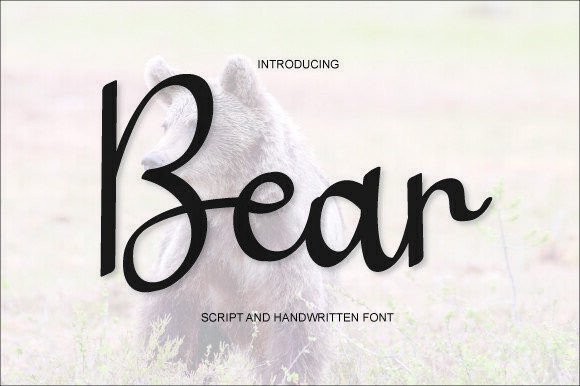
In the vast world of digital typography, finding a font that feels genuinely human can be a challenge. Many script fonts either look too rigid or too chaotic, missing the organic touch that makes handwritten text so appealing. Enter Bear, a charming and unique quirky script handwritten font that has captured the hearts of designers and creators alike. With its playful curves and smooth strokes, Bear creates a warm and inviting look that transcends ordinary digital text, making it an exceptional choice for projects that demand personality and emotion.
Whether you are a professional graphic designer, a small business owner crafting your brand identity, or a hobbyist creating personalized gifts, understanding the nuances of this typeface can elevate your work. This article explores the characteristics, applications, and practical considerations of using Bear in your creative toolkit.
The Anatomy of Charm: What Makes Bear Unique?
At first glance, Bear presents itself as a quirky and fluid script. However, its design philosophy goes deeper than just looking "cute." The font is engineered to balance readability with artistic flair. Unlike many handwritten fonts that suffer from inconsistent baselines or illegible letterforms, Bear maintains a cohesive rhythm.
Playful Curves and Smooth Strokes
The defining characteristic of Bear is its playful curvature. The letters flow into one another with a natural bounce, mimicking the slight imperfections of real handwriting. This movement prevents the text from looking static or sterile. The smooth strokes ensure that even when the font is scaled down, it retains its clarity. This is crucial for applications where the text needs to be legible but stylistic, such as on product packaging or social media graphics.
A Warm and Inviting Aesthetic
Typography carries emotional weight. Serif fonts often convey tradition and authority, while sans-serifs suggest modernity and efficiency. Bear, conversely, communicates warmth and intimacy. It feels personal, as if a friend has written a note to you. This psychological trigger is invaluable in marketing and personal communication, where establishing an emotional connection is the primary goal.
Seasonal Versatility: From Valentine’s Day to New Year
One of the most practical strengths of Bear is its incredible versatility across different themes and seasons. Because it evokes feelings of joy and affection, it fits seamlessly into festive contexts.
- Valentine’s Day: The romantic loops and gentle flow of Bear make it the quintessential font for love letters, wedding invitations, and romantic branding. It captures the essence of affection without being overly formal.
- Christmas: During the holiday season, designs often aim for a cozy, nostalgic feel. Bear’s handwritten nature pairs perfectly with holiday cards, gift tags, and festive social media headers, adding a human touch to the winter festivities.
- New Year and Easter: For New Year’s, Bear can convey a sense of hopeful, fresh starts. Similarly, for Easter, its light and airy structure complements spring themes, pastel colors, and renewal motifs.
Real-World Applications and Scenarios
To truly understand the value of Bear, we must look at how it functions in real-world scenarios. Its utility spans across various industries and personal projects.
For the Entrepreneur and Small Business Owner
Brand identity is about differentiation. If your business relies on a personal touch—such as a bakery, a boutique clothing line, or a handmade craft store—Bear can become a cornerstone of your visual identity. Using Bear for your logo or product labels signals to customers that your products are made with care and individuality. It moves your brand away from corporate sterility and toward a community-focused, approachable image.
For Digital Creators and Social Media Managers
In the fast-paced world of social media, stopping the scroll is essential. Text overlays on Instagram stories, Pinterest pins, and YouTube thumbnails benefit greatly from distinct typography. Bear is excellent for call-to-action phrases or headers because its unique shape draws the eye. It breaks the monotony of standard web fonts like Arial or Helvetica, making your content feel more curated and professional.
For Personal Projects and Gifting
Beyond commercial use, Bear shines in personal applications. Imagine creating a custom scrapbook, designing a menu for a family dinner, or printing labels for homemade jams. Bear allows you to add a professional yet personal flair to these projects without needing advanced calligraphy skills. It democratizes design, allowing anyone to produce beautiful, handwritten-style text.
Evaluating Suitability: Strengths and Considerations
While Bear is a powerful tool, it is not a universal solution for every design problem. Understanding its strengths and limitations is key to using it effectively.
The Strengths
- Emotional Resonance: As discussed, Bear excels at creating an emotional connection. It is ideal for brands and projects that prioritize empathy and approachability.
- Visual Interest: It adds immediate texture and depth to a layout. A page dominated by standard text can be instantly livened up with a headline set in Bear.
- Thematic Flexibility: It works well across a surprising range of themes, from rustic and vintage to modern and chic, depending on the colors and imagery it is paired with.
The Considerations and Limitations
The primary limitation of any script font, including Bear, is legibility at small sizes. Handwritten fonts with connected ligatures or intricate swashes can become difficult to read when used for body text or in very small print sizes.
- Avoid Body Text: Do not use Bear for long paragraphs. The eye tires quickly when reading continuous handwritten text on a screen. Stick to headings, subheadings, and short call-outs.
- Contrast is Key: Because Bear has a delicate structure, it requires high contrast to be legible. Avoid placing it over busy backgrounds or using light colors on light backgrounds.
- Context Matters: While Bear is versatile, it may not be appropriate for serious corporate communications, legal documents, or academic papers where authority and clarity are paramount.
Practical Guidance for Implementation
If you decide to integrate Bear into your workflow, here is some guidance on how to get the most out of this font.
Pairing Fonts
A strong design rarely relies on a single font. Bear pairs best with clean, simple sans-serif fonts. The contrast between the organic, irregular shapes of Bear and the geometric precision of a font like Montserrat or Open Sans creates a pleasing visual hierarchy. Use Bear for the "flavor" (headlines) and the sans-serif for the "substance" (body copy).
Color and Spacing
When using Bear, pay attention to tracking (letter spacing) and leading (line spacing). Handwritten fonts often benefit from slightly looser spacing to prevent the letters from crashing into one another. Additionally, Bear looks best in colors that mimic real ink—think charcoal greys, deep blues, or rich reds—rather than stark black, which can sometimes look too harsh against the soft curves.
Conclusion
Bear is more than just a collection of vector points; it is a tool for storytelling. Its ability to infuse a project with warmth, personality, and a touch of whimsy makes it an invaluable asset for anyone looking to connect with their audience on a human level. Whether you are designing a romantic Valentine’s card, a cozy Christmas menu, or a welcoming brand logo, Bear offers a delightful touch that standard fonts simply cannot replicate.
By understanding its features and respecting its limitations, you can harness the full potential of this quirky script. It invites you to step away from the rigid structures of standard typography and embrace a more fluid, expressive, and ultimately human approach to design.