Farah: A Strategic Approach to Harvest-Inspired Design
In the world of visual communication, every design choice is a decision. Selecting a typeface is not merely about aesthetics; it is about aligning your message with a specific emotional and strategic resonance. For projects that seek to evoke the warmth, abundance, and gratitude of the autumn season, the Farah font presents a unique and powerful tool. This rustic, hand-drawn font, inspired by the harvest, is more than a decorative element—it is a strategic asset for creating authentic connections with your audience. Understanding how to deploy Farah intentionally can transform your seasonal campaigns from simply festive to meaningfully engaging.
Understanding the Strategic Value of a Thematic Font
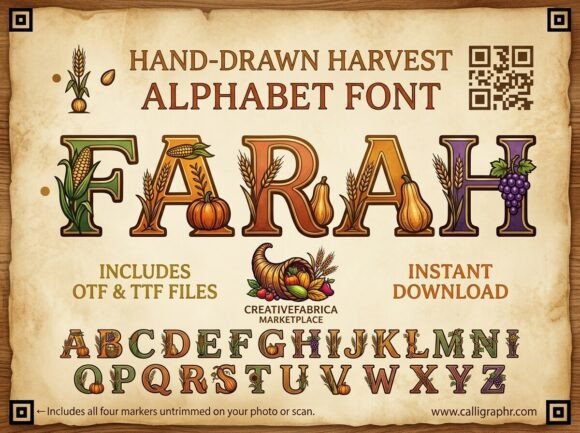
A font like Farah operates on a level that transcends basic typography. Its letters are not just characters; they are miniature illustrations of pumpkins, corn husks, wheat stalks, and grapes, rendered in a warm palette of burnt orange, gold, and deep plum. This intricate detailing carries significant psychological weight. It instantly communicates a narrative of rustic authenticity, seasonal celebration, and natural bounty. For a business or creator, leveraging this built-in narrative is a form of efficient storytelling. It allows you to embed core values—such as tradition, gratitude, and connection to the earth—directly into your visual identity without a single paragraph of explanation.
However, this potency requires careful consideration. The very specificity that makes Farah powerful also defines its appropriate context. Its utility is not universal. Using it for a tech startup's annual report or a minimalist fashion brand would create cognitive dissonance, confusing your audience rather than connecting with them. The strategic question, therefore, is not simply "Is this font beautiful?" but "Does this font's inherent story align with the story I need to tell?" When the answer is yes, Farah becomes an invaluable asset for cutting through visual noise and making an immediate, heartfelt impression.
Practical Applications and Goal-Oriented Deployment
The true measure of a design asset lies in its application. Farah excels in scenarios where its harvest-inspired personality directly supports the project's objectives. Consider the following practical use cases, each tied to a specific goal.
- Branding for Seasonal Businesses: For a family-owned winery, a craft brewery releasing an autumn ale, or a local farmers' market, Farah can become the cornerstone of seasonal branding. Using it for logos, bottle labels, and signage does more than decorate; it strategically positions the business as an integral part of the community's harvest experience, fostering loyalty and enhancing perceived value.
- Event Marketing and Communication: Planning a Thanksgiving charity drive, a fall festival, or a farm-to-table dinner? Farah on posters, invitations, and social media graphics acts as a cohesive thematic thread. It sets the tone instantly, improving communication clarity by signaling the event's nature before a word is read. This supports marketing goals by increasing relevance and appeal to the target audience.
- Content Creation and Publishing: Bloggers and publishers focusing on homesteading, seasonal cooking, or sustainable living can use Farah for chapter headings, pull quotes, or featured images. This thoughtful integration enhances the reader's experience, making the content feel more immersive and aligned with its subject matter, which can boost engagement and time spent on page.
In each scenario, the font is not an afterthought but a deliberate component of the operational and creative strategy. It works silently to reinforce positioning, clarify communication, and enhance the customer experience.
Integrating Farah into Your Workflow: Planning and Execution
Adopting a font as detailed as Farah requires a shift in your design thinking. It cannot be treated as a workhorse typeface for body copy. Its strategic use lies in accent and emphasis. A practical planning approach is to view it as the "headline act" or the "signature element," supported by a clean, highly legible sans-serif or serif font for paragraphs and smaller text. This contrast ensures readability while allowing Farah's artistic details to shine where they will have the most impact.
Before finalizing your design, conduct a simple context test. Mock up your key piece—a poster, a label, a website banner—and evaluate it against these decision-making criteria:
- Goal Alignment: Does this design clearly communicate the intended seasonal message or value proposition?
- Audience Reception: Will my target demographic perceive this as authentic and appealing, or as overly whimsical and niche?
- Visual Hierarchy: Is Farah used in a way that guides the viewer's eye effectively, or does its detail cause visual clutter?
This disciplined approach prevents the common pitfall of using a novelty font simply because it is available. It ensures that every use of Farah is justified by a clear strategic purpose, contributing positively to your project's long-term results rather than detracting from them.
Navigating Risks and Ensuring Intentional Use
Every powerful tool carries potential risks if misapplied. The primary risk with Farah is using it without a clear context, which can undermine professionalism. A financial advisor using it for a newsletter might confuse clients, while a corporate trainer using it for a leadership seminar could dilute the seriousness of the topic. The font's festive connotations must align with the subject's inherent tone.
Another consideration is longevity. While perfect for annual seasonal campaigns, relying solely on Farah for all communications year-round would quickly date your materials and weaken its impact. The strategic practitioner uses it as a seasonal accent—deployed for specific campaigns and then retired—preserving its freshness and effectiveness. This cyclical use mirrors the very harvest season it represents, making its appearance an eagerly anticipated event for your audience.
Conclusion: Cultivating Intentional Design
Ultimately, Farah is a testament to the idea that design is most effective when it is intentional. It is not a default choice but a considered one, selected when its unique story of autumnal abundance serves your larger goals. By treating it as a strategic asset—planning its use, pairing it wisely, and deploying it in context—you move beyond decoration. You begin to craft visual experiences that resonate on an emotional level, build stronger brand connections, and communicate with a clarity that transcends words. In doing so, you bring the warmth and generosity of the cornucopia to your digital canvas, not as a random flourish, but as a meaningful part of your creative and professional strategy.