Galory: Evaluating the Retro-Modern Display Typeface
In the current design landscape, typography often walks a fine line between minimalism and maximalism. While clean sans-serifs dominate digital interfaces, there remains a persistent and growing demand for typefaces that command attention and exude personality. Enter Galory, a display typeface that attempts to bridge the gap between the analog warmth of the past and the digital clarity of the present. This article offers a professional evaluation of Galory, analyzing its aesthetic appeal, technical construction, and practical utility for modern branding and design projects.
Defining the Aesthetic: Retro Roots with a Modern Edge
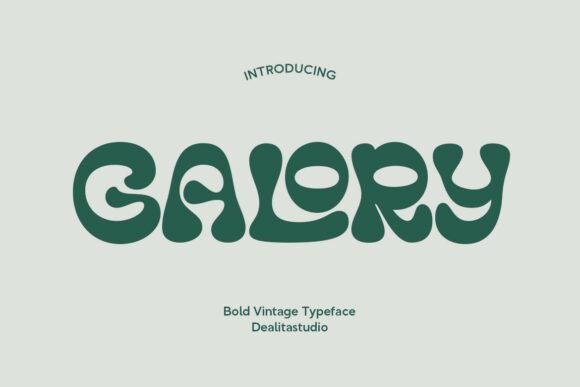
Galory is categorized as a bold, retro-inspired display font. Its DNA is clearly rooted in the graphic design trends of the 1970s, an era characterized by psychedelic posters, funky album covers, and expressive branding. However, unlike many retro fonts that simply mimic the distressed or uneven textures of vintage printing, Galory offers a modern twist. It maintains the strong curves and dynamic shapes of the disco era but cleans them up with a contemporary finish. This results in a typeface that feels nostalgic without looking dated.
The defining characteristic of Galory is its structure. The letterforms feature thick strokes and a distinct curvature that suggests movement and energy. It is not a static font; the letters seem to lean forward, giving text a sense of momentum. For designers working on projects that require a "funky personality"—such as vintage packaging, music festival posters, or boutique branding—Galory provides that specific visual language immediately. It captures the spirit of a time when design was bold and unapologetic, making it a strong candidate for any project aiming to stand out in a crowded market.
Technical Construction and Versatility
When evaluating a display font, one must look beyond the initial "vibe" and assess the technical quality of the letterforms. Galory presents a bold structure that holds up well at large scales. The curves are smooth and vector-clean, which is essential for scaling up to billboard sizes or down to large packaging headers without losing fidelity.
The usability of Galory lies in its versatility within the retro niche. While it is not designed for body copy—its high personality factor would make long paragraphs difficult to read—it excels in headlines, sub-headers, and logo lockups. The unique character shapes allow for interesting ligatures and kerning arrangements, giving designers flexibility to create custom wordmarks. For instance, in the context of fashion labels or music branding, the ability to manipulate these bold curves can result in a logo that feels bespoke rather than "out of the box."
Furthermore, the font’s consistency is noteworthy. Some retro-inspired typefaces suffer from irregular baselines or inconsistent stroke weights that can make professional typesetting difficult. Galory appears to balance its expressive style with the structural discipline required for professional use. It offers a reliable foundation for designers who want the retro look but need the predictability of modern font engineering.
Practical Applications and Use Cases
Understanding where Galory fits best is crucial for designers and business owners. Because of its strong visual presence, it is best suited for specific contexts where impact is the primary goal.
- Vintage Packaging and Branding: For products like craft beers, artisanal snacks, or skincare lines that want to evoke a sense of heritage, Galory is highly effective. It suggests a story behind the brand, implying that the product has character and history.
- Event Posters and Merchandise: The energy of the font makes it ideal for music events, particularly genres like funk, soul, or indie rock. It translates well to merchandise like T-shirts and tote bags, where the typography often needs to function as a graphic element in itself.
- Social Media Graphics: In the fast-scrolling environment of platforms like Instagram, bold typography is essential. Galory’s "stop-the-scroll" quality makes it suitable for quote graphics, sale announcements, and influencer content that aims to project a cool, retro-modern aesthetic.
However, context is key. Using Galory for a corporate law firm or a medical technology startup would likely be a mismatch. Its playful and bold nature is best reserved for creative industries, lifestyle brands, and entertainment. For entrepreneurs and freelancers in these sectors, Galory can serve as a cornerstone of a visual identity that needs to communicate confidence and style.
Workflow Integration and Long-Term Value
For the working designer, the value of a font is also measured by how well it integrates into a workflow. Galory, being a display font, is typically used for specific assets rather than system-wide design systems. This means it is unlikely to become a "workhorse" font used every day, but rather a specialized tool in a designer's toolkit.
The long-term value of Galory depends on the longevity of the retro trend. While specific design fads come and go, the "70s revival" has proven to be a recurring theme in graphic design. It is a style that resonates across generations, appealing to older demographics through nostalgia and to younger audiences through a sense of vintage authenticity. Therefore, investing in a high-quality retro typeface like Galory is unlikely to result in a tool that feels obsolete in a year. It is a style that has demonstrated staying power.
From a practical standpoint, designers should consider how Galory pairs with other typefaces. Because it is so distinct, it often works best when paired with a neutral sans-serif or a clean serif for body text. This contrast allows Galory to shine as the headline act without overwhelming the viewer. For example, pairing Galory with a geometric sans-serif can create a "Retro-Futurist" look, while pairing it with a traditional serif can lean into a more "Bohemian" aesthetic.
Final Assessment
Galory is not a subtle typeface. It is a bold statement piece designed for projects that dare to be different. Its strength lies in its ability to instantly inject nostalgia, energy, and style into a design without requiring extensive modification. It successfully balances the funky, dynamic shapes of the 1970s with the clean, vector precision required for modern digital and print production.
For designers, marketers, and business owners looking to create vintage packaging, retro branding, or standout posters, Galory offers a practical and visually compelling solution. It is a typeface that understands its purpose: to grab attention and convey a specific, high-energy mood. While it may not be the solution for every design problem, for the right project, Galory provides the retro flair and confidence needed to make a lasting impression.