Split Monogram: A Detailed Look at Its Design, Applications, and How It Compares
When selecting typography for a project that requires a personal, elegant touch, the choice of font can define the entire aesthetic. Among the many styles available for personalized designs, the split monogram has carved out a distinct niche. This specific approach to lettering involves taking a traditional serif capital letter and introducing a clean, horizontal gap or "split" through its center. The result is a balanced, ornamental frame that is specifically designed to hold text—typically a name, date, or short phrase—within the letterform itself.
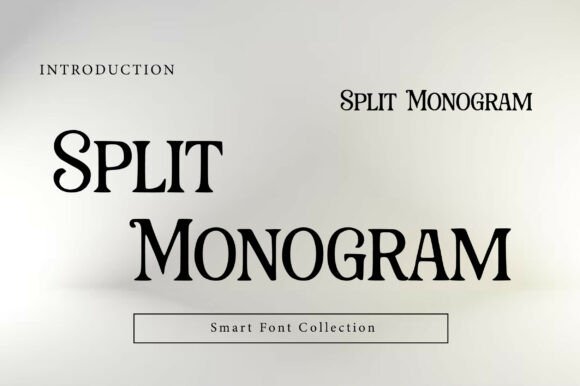
Split Monogram, as a specific typeface or design concept, embodies this principle with a classic structure. It is not merely a standard serif font but a purpose-built decorative system. The letterforms are crafted with strong, recognizable serifs and a balanced weight that ensures legibility while maintaining an air of sophistication. The central split is engineered to be visually harmonious, providing a clear and aesthetically pleasing space for customization. This inherent structure makes it a powerful tool for designers, crafters, and individuals looking to create items that feel both bespoke and professionally polished.
Anatomy of the Split Monogram Style
Understanding the core components helps in evaluating its fit for any given project. The design typically features:
- Ornamental Serif Base: The primary letter is a capital serif character, often with subtle flourishes or a strong, sturdy form that conveys tradition and permanence.
- Central Void: The defining feature is the horizontal break in the letter. This space is not empty but is an integral part of the design, acting as a placeholder or frame for additional text.
- Visual Balance: The top and bottom halves of the split letter are usually symmetrical or carefully weighted to maintain stability and elegance, even with the interruption.
- Customization Layer: The split area is designed to accommodate a contrasting font—often a script, sans-serif, or simple serif—to insert names, initials, or dates, creating a cohesive, layered piece.
This combination results in a font or design element that is inherently structured for personalization. Unlike a standard monogram font where letters might be interlocked or stacked, the split monogram prioritizes the integration of text within a single, dominant letterform.
Where Split Monogram Finds Its Strength
The practical applications of a Split Monogram are broad, but they excel in scenarios where a single initial needs to carry significant visual weight and personal meaning. Its strengths lie in its ability to be both a focal point and a container for information.
Wedding and Event Design: This is perhaps the most common application. For wedding invitations, programs, or signage, a split monogram allows the couple's shared initial to be prominently displayed, with their full names elegantly inscribed within the split. It creates a cohesive emblem that can be used across all stationery, from napkins to favor tags.
Branding and Logo Development: For businesses or personal brands that revolve around an individual—such as boutique studios, consultants, or artisan makers—a split monogram can form the core of a logo. It offers a way to build a mark around an initial while integrating the business name, resulting in a unique, professional symbol.
Personalized Gifts and Home Décor: The format is ideal for items like engraved cutting boards, custom doormats, embroidered towels, or framed wall art. The central split allows for a family name or a special date to be incorporated directly into the decorative letter, making the item feel intentionally crafted.
Signage and Stationery: Beyond weddings, it works well for personalized stationery sets, monogrammed labels, or elegant signage for a home office or studio. The design's inherent formality lends itself well to printed and engraved materials.
Comparing Split Monogram to Alternative Approaches
When exploring options for personalized typography, it's useful to understand how a split monogram differs from other popular styles. This comparison isn't about declaring a winner, but about matching the tool to the task.
Versus Interlocking or Stacked Monograms: Traditional monograms often involve two or three letters of varying sizes interlocking or arranged in a stack. These are excellent for representing multiple initials (e.g., first, last, middle). A split monogram, by contrast, is typically centered on a single initial. Its primary function is to house text, not to combine multiple letters into a new form. If your goal is to showcase a couple's joint initial with their names, the split design is purpose-built for that. If you need a compact mark for three individuals, an interlocking style might be more efficient.
Versus Standard Decorative Serifs: You could take a classic serif font and manually split it in design software. However, a dedicated Split Monogram typeface or design template is optimized for this effect. The proportions, the weight of the letter, and the width of the split are pre-calculated to ensure the inserted text fits gracefully. Doing this manually requires more skill and time to achieve the same level of balance and cohesion.
Versus Script or Calligraphy Fonts: Script fonts offer fluid, connected elegance. They are beautiful for writing out full names or phrases. However, they lack the structural, frame-like quality of a split monogram. The split monogram provides a more architectural and contained feel. For projects where you want a strong initial as a central emblem, the split monogram offers a more defined structure than a flowing script would.
Versus Badges, Crests, or Frames: Another approach is to place text within a decorative badge, shield, or circular frame. While these can be very effective, they introduce additional graphical elements. The split monogram integrates the frame into the letter itself, creating a more streamlined and typographically focused design. It can be a cleaner option when you want the letter to be the undisputed hero of the piece.
Evaluating Fit: When to Choose (or Not Choose) Split Monogram
Making an informed decision involves considering both the advantages and the inherent tradeoffs of this design approach.
Ideal Situations:
- Your project revolves around a single, significant initial that you want to highlight.
- You need to integrate a name, date, or short word directly into a letterform for a seamless look.
- The desired aesthetic is classic, elegant, and somewhat formal—think weddings, heritage brands, or sophisticated personal items.
- You value a pre-designed, balanced structure that ensures text placement looks intentional and professional without advanced design work.
Potential Limitations or Alternative Needs:
- If you need to represent multiple initials equally (like a corporate logo for "ABC Corp"), an interlocking monogram or a custom lettermark might be more appropriate.
- For very casual, playful, or ultra-modern projects, the traditional serif and structured split might feel too rigid. A more abstract or geometric font style could be a better fit.
- The central split area has limited space. If the text you need to insert is long or complex, it may become illegible or visually cluttered. In such cases, placing text below or beside a monogram might be clearer.
- Some applications, especially in digital UI or very small-scale print, may require a simpler, more robust font. The ornamental details of a split monogram can become lost at very small sizes.
Practical Considerations for Implementation
When working with a Split Monogram font or design asset, a few practical points can guide successful use:
Font Pairing is Key: The text inserted into the split is crucial. It should complement, not compete with, the ornamental initial. A simple, clean sans-serif or a delicate script often works best. Ensure there is sufficient contrast in weight or style for legibility.
Size and Scale: Consider the final output size. On a large sign or invitation, the details will be clear. On a small label or favicon, the split and the inserted text may merge into an unreadable blur. Always test at the intended size.
Color and Contrast: The design can be used in a single color for an engraved look, or the split text can be in a contrasting color to make it stand out. The choice depends on the medium and the desired effect—foil stamping, embossing, or digital coloring all yield different results.
Customization Depth: While the split monogram provides a strong starting point, it is a component. The overall success of the design depends on how it's integrated with other elements—borders, flourishes, or background patterns. It works best when it is the central focus rather than one of many competing ornamental pieces.
In conclusion, the Split Monogram style offers a unique and elegant solution for specific personalization needs. Its value lies in its specialized design—a marriage of a strong decorative initial with a functional space for text. By understanding its core design, comparing it thoughtfully to other typographic approaches, and honestly assessing its fit for a project's goals and constraints, designers and individuals can determine if it is the right tool to bring their vision to life with timeless sophistication.