Black Nice Typeface: A Detailed Look at Its Gothic Stencil Aesthetic
In the realm of typography, finding a font that bridges historical weight with modern utility is a challenge. Black Nice Typeface represents a specific intersection of these two worlds, combining the ornate, angular characteristics of blackletter calligraphy with the functional, industrial aesthetic of stencil design. This article explores the technical and stylistic attributes of Black Nice, examining where it fits within a designer's toolkit and how it compares to other typographic approaches.
The Core Concept: Blackletter Meets Stencil
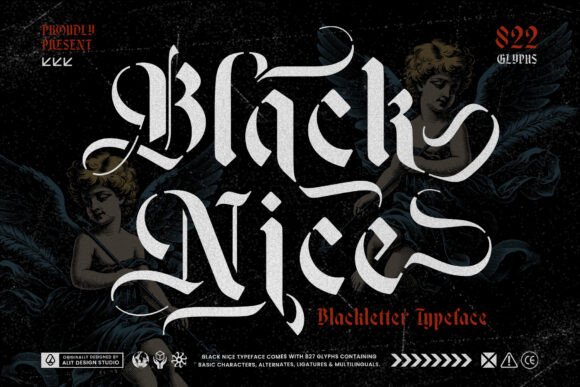
Black Nice is not merely a blackletter font; it is a reimagining of the style through a stencil lens. Traditional blackletter, or gothic script, is known for its dense, vertical strokes and intricate curves, often associated with historical documents and formal signage. By introducing stencil cuts—strategic gaps in the letterforms—the typeface achieves two things: it lightens the visual density typical of blackletter fonts, and it introduces an industrial, utilitarian feel reminiscent of shipping crates, military stencils, or urban art.
This fusion creates a unique visual texture. The Black Nice Typeface maintains the decorative flair of gothic scripts but renders it in a way that feels more contemporary and less bound to medieval aesthetics. The stencil elements are engineered to ensure the letters remain legible and structurally sound, avoiding the fragmented look that can sometimes plague poorly executed stencil fonts.
Analyzing the Feature Set
When evaluating a typeface for professional use, the raw design is only part of the equation. The underlying engineering and feature set determine its flexibility. Black Nice offers a suite of OpenType features that allow for significant customization.
- Extensive Glyph Library: With 822 glyphs, the font supports a wide range of languages and includes a comprehensive set of punctuation and symbols. This breadth is crucial for complex branding projects or multilingual editorial work.
- Alternates and Swashes: The availability of alternate letterforms allows designers to adjust the visual rhythm of a word. Swashes can add a level of ornamentation, softening the industrial edge of the stencil cuts with elegant, flowing tails.
- Ligatures: The inclusion of ligatures helps manage the spacing issues often inherent in blackletter fonts. By linking specific letter pairs, the text flows more naturally, mimicking the behavior of hand-lettering.
- Structural Integrity: The stencil cuts are not arbitrary. They are placed to preserve the "bones" of the letter. This is a critical distinction; a poorly designed stencil font can become illegible at small sizes because the letter structure collapses. Black Nice appears engineered to maintain readability across various scales.
Comparing Approaches: Black Nice vs. Traditional Blackletter
When deciding between Black Nice and a traditional, un-cut blackletter font, the primary consideration is tone. Traditional blackletter scripts, such as Fraktur or Textura, convey a sense of history, formality, and gravity. They are often used for diplomas, religious texts, or heritage branding.
Black Nice shifts this tone. The stencil cuts introduce a sense of modernity, grit, and accessibility. It feels less like a historical document and more like a contemporary design choice. If a project requires a "heritage" vibe but needs to feel current or edgy—such as a craft brewery logo, a tattoo studio, or a streetwear brand—Black Nice may be more appropriate than a purely historical blackletter.
Tradeoffs and Best-Fit Scenarios
No typeface is universal. The strengths of Black Nice—its bold, decorative nature and stencil aesthetic—also define its limitations.
Where Black Nice Excels
- Display and Headline Use: This typeface is designed for impact. It works exceptionally well for logos, posters, album covers, and apparel graphics where the text needs to be a focal point.
- Thematic Branding: For brands that want to evoke a "vintage industrial" or "modern gothic" identity, Black Nice provides a ready-made aesthetic. It is particularly effective in contexts like packaging for artisanal goods, event promotions, or digital media headers.
- Tattoo and Custom Lettering: The ornate yet structured nature of the letters, combined with the stencil cuts, offers a strong foundation for tattoo artists looking for a bold, legible script that stands out.
Potential Limitations
- Body Text: Like most blackletter and highly decorative fonts, Black Nice is not suited for long-form reading. Its intricate details can cause visual fatigue at small sizes or in dense paragraphs.
- Minimalist Contexts: In design environments that prioritize clean lines, negative space, and neutrality, Black Nice may feel overwhelming or stylistically out of place.
- Overuse of Features: While the alternates and swashes are powerful, using too many decorative elements in a single composition can lead to a cluttered, chaotic appearance. Restraint is often necessary.
Decision Factors: Choosing the Right Tool
When evaluating whether to use Black Nice Typeface, consider the following questions:
- What is the project's tone? Does it need to feel historical, industrial, edgy, or elegant? Black Nice occupies a specific niche where these qualities overlap.
- What is the application? Is the text meant to be read quickly and in large blocks, or is it meant to be a visual centerpiece? Black Nice is a display font.
- What is the medium? Consider how the stencil cuts will render. In high-resolution print or vector graphics, the details will be crisp. On low-resolution screens or very small embroidery, some of the nuance might be lost.
If the goal is a neutral, highly legible sans-serif or a classic serif for extended reading, Black Nice is not the answer. However, if the goal is to create a memorable visual identity that combines the weight of tradition with a contemporary, industrial edge, it is a compelling option to consider. It offers a distinct alternative to the more common geometric or script-based display fonts, providing a tool for designers looking to explore a darker, more textured typographic palette.