Exploring the Self Dream Font: A Visual Guide to Playful Branding
In the ever-evolving landscape of graphic design, typography serves as the voice of a visual composition. Selecting the right typeface is often less about legibility metrics and more about emotional resonance. For designers, marketers, and content creators seeking to convey warmth, approachability, and whimsy, the search often leads toward specific aesthetic categories. Among the many options available, Self Dream has emerged as a notable contender in the "cute" and "bubble" font category. This article explores the characteristics, practical applications, and situational fit of Self Dream, helping you evaluate whether its distinct style aligns with your creative objectives.
Understanding the Self Dream Aesthetic
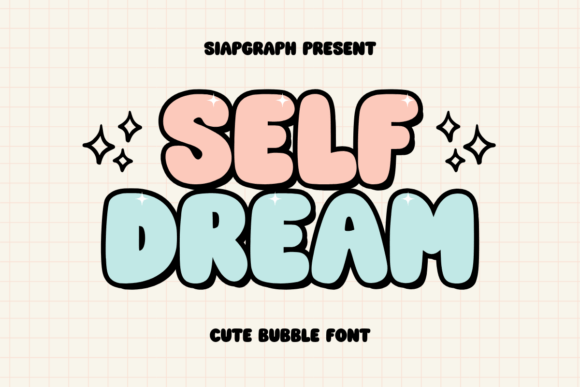
At its core, Self Dream is defined by its soft, rounded edges and inflated letterforms. It draws inspiration from the bubble letter style popularized in graffiti and children’s media, yet it refines these elements into a polished, digital-ready format. Unlike standard sans-serif fonts that prioritize neutrality, Self Dream prioritizes personality. The curves are designed to feel organic and tactile, almost as if the letters were sculpted from clay or balloons.
What makes this font distinct is its ability to balance boldness with softness. Many display fonts that aim for "cuteness" can appear fragile or overly thin, rendering them useless for headlines. Conversely, heavy fonts can feel aggressive. Self Dream occupies a middle ground; it is bold enough to command attention in a poster but soft enough to remain inviting. This duality makes it a versatile tool for projects that need to be noticed without feeling imposing.
Evaluating Strengths and Tradeoffs
When evaluating any typeface, it is essential to look at both its strengths and its limitations. Self Dream excels in environments where emotional connection is the primary goal.
The Strengths: Versatility in Playful Contexts
- Brand Identity: For small businesses, particularly those in the lifestyle, beauty, or artisanal food sectors, Self Dream offers an immediate visual shorthand for "handmade" and "friendly." It suggests that the brand is approachable and customer-centric.
- Social Media Graphics: In the fast-scrolling environment of platforms like Instagram or TikTok, Self Dream captures attention quickly. Its high visual weight makes it readable even at smaller sizes on mobile screens, provided the background is not too complex.
- Poster Design: When used for event posters—such as birthday parties, local markets, or casual workshops—the font adds a layer of festivity that standard fonts like Helvetica or Arial cannot achieve.
The Tradeoffs: Legibility and Formality
The very features that make Self Dream charming also create constraints. The most significant tradeoff is long-form readability. Because the letters are stylized and inflated, reading a full paragraph of Self Dream can be visually fatiguing. It is designed for impact, not for flow. Therefore, it should rarely be used for body text or detailed instructions.
Furthermore, the "cute" factor can be a liability in serious contexts. If you are designing for a corporate law firm, a medical institution, or a high-tech finance startup, Self Dream would likely undermine the required sense of authority and trust. It signals playfulness, which can be misinterpreted as a lack of seriousness in professional settings.
Comparative Analysis: How Does It Fit?
To make an informed decision, it helps to compare Self Dream against broader categories of fonts. Designers often weigh it against three main groups: standard sans-serifs, retro display fonts, and hand-lettering scripts.
Self Dream vs. Standard Sans-Serifs
Standard sans-serifs (like Open Sans or Roboto) are the workhorses of the digital world. They are neutral and highly legible. Self Dream is not a replacement for these; rather, it is a complement. While a sans-serif is best for the "how-to" information, Self Dream is best for the "look at this" information. If your project requires conveying complex data or legal disclaimers, stick to the sans-serif. If your project needs a headline that pops, Self Dream is the superior choice.
Self Dream vs. Retro and Groovy Fonts
The "groovy" font trend often features high-contrast strokes and sharp, geometric curves reminiscent of the 1970s. While these fonts share a similar vibe with Self Dream, they often feel more aggressive or "edgy." Self Dream offers a softer, more modern interpretation of fun. It lacks the sharp edges of retro fonts, making it feel more contemporary and gender-neutral. If you want a nostalgic vibe, a retro font might be better. If you want a modern, friendly vibe, Self Dream is the appropriate option.
Self Dream vs. Hand-Lettering Scripts
Script fonts mimic handwriting and offer a personal touch. However, they often suffer from poor legibility, especially when written in all caps or at small sizes. Self Dream provides a similar sense of personality but with much higher structural integrity. Because it is a display font rather than a cursive script, each letter stands distinct, reducing the risk of words blurring together. For branding that needs to feel personal but also needs to be readable on signage, Self Dream is often the safer bet.
Practical Use Cases and Decision Factors
Deciding whether to use Self Dream involves asking specific questions about your project's goals and audience.
When is Self Dream the Right Choice?
Self Dream is likely the right choice if your project meets the following criteria:
- Target Audience: Your audience includes children, families, or young adults (20–35) who respond to trends and visual aesthetics. It is particularly effective for Gen Z and Millennial demographics who appreciate "kawaii" or cute culture.
- Channel: The design will be viewed primarily on digital screens (social media, websites) or short-term physical media (flyers, stickers, packaging) rather than long-term signage where readability at a distance is critical.
- Tone: The brand voice is casual, optimistic, and energetic.
When to Consider Alternatives
You may need to look for alternatives if:
- Professionalism is Key: If the document is a resume, a business proposal, or a corporate report, Self Dream will distract from the content.
- Space is Limited: Because bubble fonts like Self Dream have wide letterforms, they take up more horizontal space than condensed fonts. If you are designing for a very narrow column or a small button, this font may not fit.
- High Contrast is Needed: If you are designing a black-and-white newspaper ad, the subtle curves of Self Dream might get lost. It performs best with color and padding.
Integrating Self Dream into Design Systems
For designers looking to integrate Self Dream into a larger system, the key is pairing. Because Self Dream is so expressive, it requires a "quiet" partner.
A common mistake is pairing Self Dream with another decorative font. This creates visual noise. Instead, pair it with a simple, geometric sans-serif. For example, using Self Dream for the main headline and a clean font like Montserrat or Lato for the subtext creates a hierarchy that guides the eye naturally.
Additionally, consider the color palette. Self Dream works exceptionally well with pastel gradients, soft neons, and high-saturation primary colors. It can soften the edge of a neon palette or add depth to a pastel one. However, it can look washed out in monochromatic grey schemes or overly aggressive in harsh, clashing color combinations.
Conclusion: The Role of Typography in Visual Strategy
Typography is a strategic tool, not just a decorative one. Self Dream represents a specific slice of the design spectrum—optimizing for charm, approachability, and visual impact. It is not a universal solution, nor is it intended to be. By understanding its specific strengths—its ability to soften a brand image and attract a younger, design-savvy audience—you can deploy it effectively. Whether you are designing a logo for a bakery, a thumbnail for a lifestyle vlog, or a flyer for a community event, Self Dream offers a reliable way to inject personality into your work, provided it is used with intention and paired wisely.