Melia: Unlocking Surrealism in Display Typography
The Enigmatic Soul of the Typeface
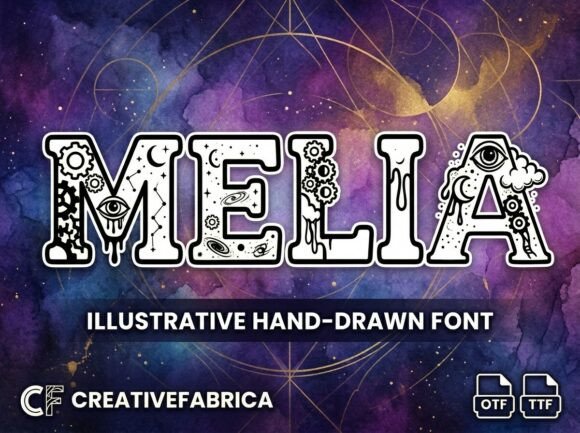
In the vast landscape of digital typography, few fonts manage to bridge the gap between the mechanical precision of the industrial age and the fluid, often unsettling nature of dreams. Melia is an intricate display typeface designed to do exactly that. It is not merely a collection of letters; it is a visual narrative. The font features bold, slab-serif letterforms that serve as a canvas for a rhythmic collage of hand-drawn illustrations. Within the strokes of its characters, you will find the cogs of vintage machinery, the haunting gaze of weeping eyes, the infinite depth of cosmic swirls, and the fluid distortion of melting textures.
For the uninitiated, typography often seems like a binary choice between "readable" and "pretty." Melia challenges this notion by prioritizing personality and atmosphere. It is a font that demands to be seen, not just read. The heavy illustrative weight of the typeface gives it an enigmatic personality, making it a powerful tool for visual storytelling. When you use Melia, you are not just writing a headline; you are curating a mood that is both mystical and mechanical.
A Tool for the Visionary Creator
Different audiences approach a font like Melia with distinct priorities. For the independent graphic designer or the freelance artist, the primary appeal lies in the font's ability to act as a standalone artwork. In the world of independent occult-themed branding, for example, the aesthetic requirements are specific. One needs imagery that feels ancient yet timeless, esoteric yet accessible. Melia satisfies this by embedding symbolic imagery directly into the letterforms. A designer creating a logo for a metaphysical shop or a tarot deck manufacturer can use Melia to instantly communicate a sense of mystery without needing to commission custom illustrations for every word.
Similarly, creators in the music industry—specifically within progressive rock, psychedelic, or metal genres—often seek typography that feels hand-crafted and heavy. Album art is the first point of contact between the music and the listener. Melia’s "dreamlike-industrial" soul makes it an ideal candidate for album covers, band merchandise, and tour posters. It captures the complexity of progressive rock compositions visually, suggesting a depth and intricacy that promises an immersive listening experience.
Practical Applications for Diverse Projects
While the aesthetic is niche, the application possibilities are surprisingly broad. It is helpful to break down how different professionals might integrate Melia into their workflows to understand its utility beyond surface-level beauty.
For Marketers and Social Media Strategists
In the fast-paced world of social media, stopping the scroll is the only metric that matters. Marketers often struggle to find visuals that cut through the noise of generic templates. Melia offers a solution for high-impact headers and branding assets. For a marketer promoting a creative workshop, an immersive theater event, or a niche book launch, using Melia for social media graphics ensures that the content stands out. The font’s intricate details encourage the viewer to zoom in or pause, increasing engagement time. However, a strategist must recognize that Melia is a display font. It is best used for short, punchy headlines rather than body text, where the intricate details might become overwhelming at small sizes.
For Educators and Storytellers
Educators and authors working on creative storytelling projects often look for ways to set the tone before the first sentence is read. Imagine a history teacher creating a presentation on the Industrial Revolution, or a Dungeon Master designing a custom module for a tabletop role-playing game. Melia bridges these worlds perfectly. For the educator, the "mechanical" elements of the font—gears and heavy slabs—evoke the era of steam and steel. For the storyteller, the "surreal" elements—melting textures and cosmic swirls—suggest a journey into the unknown. In these contexts, the font is evaluated based on its immersive value. It helps build the world the audience is about to enter.
Evaluating Melia: Skill Level and Utility
One of the most common questions regarding complex display fonts is accessibility for beginners. How easy is it to use a font that is essentially a piece of art?
For a beginner or hobbyist, the appeal of Melia is instant gratification. You do not need advanced illustration skills to create a striking image; the font does the heavy lifting. However, a beginner must pay attention to context. Using Melia for a standard business email would be inappropriate and difficult to read. The learning curve here is not technical, but aesthetic: understanding when to use a heavy display font versus a clean sans-serif. It is a lesson in visual hierarchy that benefits all creators.
For experienced professionals, such as art directors or brand managers, the evaluation of Melia focuses on flexibility and commercial value. They will likely test how the font scales across different mediums—does it hold up on a billboard as well as it does on a sticker? Does it pair well with a neutral body font? Professionals will appreciate the "heavy illustrative weight" as a branding asset that creates immediate recognition, provided it aligns with the brand's voice.
Striking the Balance: Creativity vs. Readability
When deciding if Melia is the right choice for your project, it is essential to weigh the balance between creative expression and functional readability. This is where the concept of "cost" in design comes into play—not just financial cost, but the cost of attention.
- High Impact, Low Density: Melia is best suited for environments where text is sparse but significant. Think of a movie poster, a book title, or a hero image on a website.
- Thematic Consistency: If your project deals with the occult, the surreal, the mechanical, or the psychedelic, Melia provides a shorthand for those themes. If your project is corporate finance, this font will likely confuse your audience.
- Pairing Potential: To maximize its usefulness, Melia should be paired with a simple, legible font for body copy. This contrast allows the display font to shine without sacrificing the overall readability of the design.
Conclusion: Who is Melia For?
Melia is not a universal solution, nor is it trying to be. It is a specialized tool for those who view typography as an extension of art. It serves the entrepreneur who wants their brand to feel distinct and esoteric. It serves the blogger who writes about the strange and unusual and needs a header that reflects their content. It serves the consumer of design who appreciates the craftsmanship of hand-drawn details.
Ultimately, choosing Melia comes down to a simple question: Does your project have a soul that is part dream, part machine? If you are looking to unlock a world of surrealism and make a bold statement that resonates on a subconscious level, this intricate display typeface is likely the missing piece of your creative puzzle. By understanding its strengths and applying it to the right context, you can transform standard text into a captivating visual experience.