Otis: A Bold Display Typeface for Creative Impact
In the world of design, typography is often the silent hero that can make or break a project. Choosing the right font isn't just about legibility; it's about conveying emotion, establishing brand identity, and capturing attention in a crowded visual landscape. For those seeking a typeface that refuses to blend into the background, Otis emerges as a compelling choice. It is a decorative display typeface engineered to be the center of attention, offering a unique artistic flair combined with a professional polish.
Understanding the Character of Otis
At its core, Otis is designed for high-impact scenarios. It is not a workhorse body text font meant for long paragraphs of reading. Instead, it is a specialized tool crafted for moments where you need a headline to scream, a logo to impress, or a title to demand respect. The design features unique artistic elements and a strong visual personality, moving away from the neutrality of standard sans-serifs or the formality of traditional serifs.
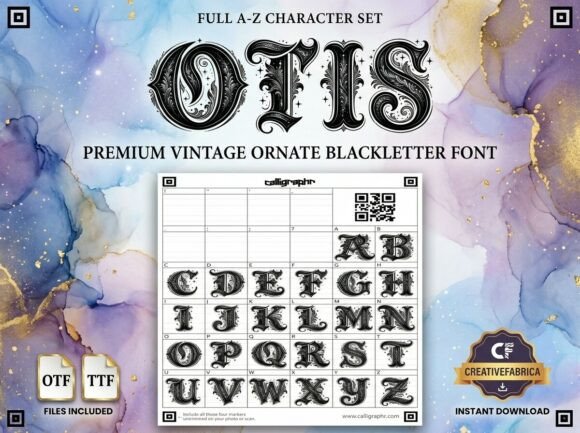
It is important to note that Otis is an ALL-CAPS typeface. This means it includes uppercase letters only, without lowercase variations. This design choice is intentional. In typography, all-caps designs are often used to create a sense of authority, stability, and importance. By removing the variable of case, the font ensures that every letterform is treated as a miniature work of art, maintaining a consistent height and weight that creates powerful, blocky visuals. For users, this means Otis is specifically optimized for headlines, logos, and decorative initials where uniformity and impact are paramount.
Why Different Creators Gravitate Toward Otis
The utility of a font like Otis varies significantly depending on who is using it and for what purpose. While the visual appeal is universal, the practical application differs between a freelancer, a small business owner, and a hobbyist.
For Graphic Designers and Creatives
Professional designers often have a toolkit filled with neutral fonts. However, when a client requests something "edgy," "modern," or "bold," a font like Otis fills that specific niche. For a designer, the value lies in versatility within its specific style. Otis is versatile enough to work across bold headlines for posters, artistic logos for streetwear brands, or creative packaging for boutique products. The professional finish ensures that even though the font is decorative, it does not look amateurish or poorly kerned.
For Entrepreneurs and Small Business Owners
For a business owner, branding is everything. If you are launching a product line that targets a younger demographic or positions itself as a disruptor in a traditional market, the typography needs to reflect that energy. Otis offers a way to stand out without hiring a hand-lettering artist. An entrepreneur looking to create packaging for a craft product, for example, could use Otis to instantly communicate a sense of craftsmanship and distinctiveness on the shelf.
For Educators and Publishers
While Otis might not be suitable for body copy in a textbook, it has specific applications in educational and publishing contexts. Teachers creating engaging presentation slides or bulletin boards can use Otis for headers to grab students' attention. Similarly, publishers designing cover art for genres like mystery, thriller, or contemporary fiction might find that the strong visual personality of Otis perfectly captures the mood of the book.
Technical Reliability and File Formats
When investing in a typeface, reliability is just as important as aesthetics. A beautiful font that fails to render correctly across different devices is a liability. Otis addresses this by providing the two industry-standard file formats:
- OTF (OpenType Font): This is the professional standard. It is ideal for advanced design software like Adobe Illustrator, InDesign, or Photoshop. OTF files often support more advanced typographic features and are the preferred choice for complex layout work.
- TTF (TrueType Font): This format ensures universal compatibility. It works seamlessly across virtually all operating systems and devices, from Windows PCs to Macs, and even mobile devices. This ensures that if you send a file to a client or a printer, the font will render exactly as intended.
This dual-format delivery means that whether you are a professional working in a high-end studio or a hobbyist using standard office software, you have access to the same quality of typography.
Evaluating Otis for Your Projects
Determining if Otis is the right choice requires a self-assessment of your project goals. Because this is a specialized display font, it serves specific priorities differently than a general-purpose font would.
Creativity vs. Legibility
If your primary goal is maximum legibility for small text or dense information, Otis is not the correct tool. However, if your priority is creativity and visual presentation, Otis excels. It forces the viewer to stop and look. For a blogger designing a hero image or a thumbnail, this "stopping power" is exactly what is needed to increase click-through rates.
Speed and Ease of Use
For beginners, Otis is relatively easy to use because it simplifies the design process. You don't need to worry about tracking between uppercase and lowercase letters or managing complex hierarchy through case changes. You type in caps, and the font handles the stylistic heavy lifting. This can speed up the design process for those who may not have formal typography training but still want a polished result.
Commercial Value and Branding
For professionals, the long-term usefulness of a font is measured by its commercial value. Can it be used for a logo that will be trademarked? Can it be used on merchandise? Otis is designed for these high-visibility applications. Its strong personality makes it memorable, which is a key component of branding. A logo set in Otis is unlikely to be confused with a competitor using a standard Arial or Helvetica.
Practical Applications and Examples
To visualize where Otis fits best, consider these practical scenarios across different fields:
- Event Flyers and Posters: A music festival or a local art show needs to grab attention instantly. Otis can be used for the main event title to convey energy and excitement, setting the tone before the viewer even reads the details.
- Apparel and Merchandise: For t-shirt designers or creators selling merchandise on platforms like Etsy or Redbubble, a font like Otis provides that "tattoo-style" or "street-art" aesthetic that is popular in casual wear. It looks great on fabric and stands out in product thumbnails.
- Social Media Graphics: In the fast-scrolling environment of Instagram or TikTok, text needs to be bold. Otis is perfect for quote graphics or announcement posts where the text itself is the primary visual element.
- Website Headers: Web designers can use Otis for H1 or H2 headings to create a dramatic contrast against a clean, simple body font. This creates a visual hierarchy that guides the user's eye naturally.
Conclusion: Is Otis Right for You?
Otis is not a font for every situation, and it doesn't try to be. It is a specialized instrument for designers, business owners, and creators who want to break away from the ordinary. If your project requires a subtle, quiet voice, you should look elsewhere. But if you need a typeface that commands the room, offers professional-grade reliability, and provides a distinct artistic personality, Otis is a powerful addition to your creative toolkit.
Before purchasing, remember the ALL-CAPS nature of the design. If your project relies on sentence case or lowercase readability, this may be a constraint. However, for logos, headlines, and decorative initials, this constraint becomes its greatest strength, ensuring that every letter is treated with the same weight and importance. Whether you are a freelancer looking to expand your font library or a business owner designing your first product label, Otis offers a way to make your words not just read, but felt.