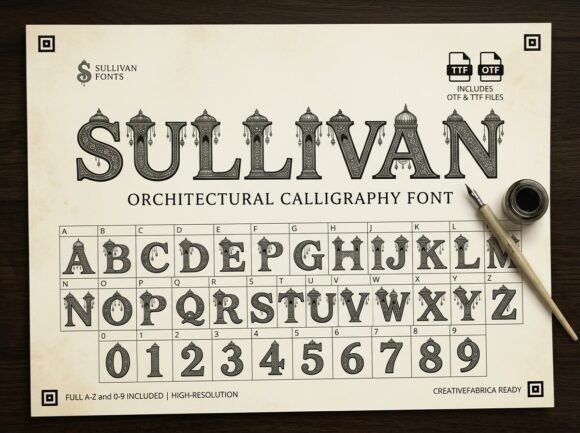
Sullivan: A Decorative Font for Bold, Artistic Projects
In a world saturated with clean, minimalist sans-serifs and dependable workhorse serifs, there's a powerful place for type that makes a statement on its own. Sullivan is that kind of typeface. It’s not a font you choose when you want the text to fade into the background; it’s a deliberate choice for when the typography itself needs to carry the weight of the design's personality. This all-caps decorative display font is engineered to be the center of attention, offering a unique artistic flair for projects that demand to be noticed.
At its core, Sullivan is about visual impact. Each letterform is crafted with distinct artistic elements, giving it a strong, memorable personality. This isn't a font for body copy or lengthy paragraphs. Its strength lies in its ability to transform a simple word or phrase into a visual focal point. The absence of lowercase letters is a critical feature, not a limitation. By designing exclusively in uppercase, the creators have ensured that every character is a polished, standalone work of art, optimized for high-impact situations where consistency and strength are paramount.
Where Sullivan Finds Its Voice: Practical Applications
Understanding a font's ideal use case is key to using it effectively. Sullivan thrives in contexts where brevity and visual punch are essential. Its design makes it a natural fit for a variety of creative and professional projects.
- Bold Headlines and Titles: For websites, posters, or magazine covers, a headline set in Sullivan instantly commands attention. It sets a tone—be it modern, artistic, or avant-garde—before the reader even processes the words themselves. Use it for main titles, chapter headings, or pull quotes to create dramatic hierarchy.
- Artistic Logos and Brand Marks: A logo needs to be distinctive and scalable. Sullivan’s strong visual identity makes it an excellent starting point for brand marks in creative industries. Think boutique agencies, artist portfolios, craft breweries, or independent record labels. Its character ensures the brand name is not just read, but remembered.
- Creative Packaging and Labels: On a shelf or in an online store, packaging has seconds to make an impression. Sullivan can elevate product packaging for specialty goods, from artisanal foods to cosmetics, adding a layer of sophistication and artistry that suggests quality and care.
- Event and Promotional Graphics: Concert posters, festival banners, gallery invitations, and sale announcements all benefit from a font that can generate excitement. Sullivan’s decorative nature helps convey the energy and theme of an event at a glance.
- Decorative Initials and Monograms: Even in a more restrained layout, a single, large initial letter set in Sullivan can add a touch of elegance and personality to a page, certificate, or bookplate.
Adapting Sullivan for Different Audiences and Goals
The true versatility of a display font like Sullivan lies in how different creators can adapt it to serve specific purposes. Its application is less about the font itself and more about the context you build around it.
For the Entrepreneur and Small Business Owner
Your brand identity needs to communicate your values quickly. If your business is built on creativity, craftsmanship, or a bold vision, Sullivan can help articulate that. Use it for your business name on a storefront sign, in the header of your website, or on social media graphics announcing a new product launch. The key is to pair it wisely. Combine Sullivan with a simple, highly readable sans-serif for body text to ensure your message remains clear and accessible. This contrast allows the decorative font to shine without sacrificing legibility for important information like contact details or product descriptions.
For the Graphic Designer and Freelancer
Sullivan becomes a powerful tool in your typographic toolkit. It’s the font you reach for when a client’s brief calls for something "edgy," "artistic," or "unconventional." Use it to create dynamic poster layouts, compelling social media ads, or unique website hero sections. Its OTF and TTF file formats ensure compatibility with all major design software, from Adobe Creative Suite to Figma. When presenting concepts, you can show how Sullivan establishes the project's visual tone, then balance it with more functional typefaces for the supporting content.
For the Blogger, Marketer, or Content Creator
In the digital space, grabbing attention is half the battle. Use Sullivan for the titles of your blog posts, YouTube video thumbnails, or podcast cover art. A visually striking title can significantly improve click-through rates. For email newsletters, a header in Sullivan can make your message stand out in a crowded inbox. However, always prioritize the user experience. Use it sparingly for key headlines only, ensuring the main content is set in a font optimized for screen reading. Its all-caps nature also makes it perfect for short, impactful call-to-action buttons or banner text.
For Educators and Publishers
While not suited for textbooks, Sullivan has a place in educational and publishing materials that aim to engage. Use it for the cover of a creative writing anthology, the title of an art history presentation, or the chapter headings in a visually oriented non-fiction book. It can help signal that the content within is innovative or thought-provoking. For publishers of indie magazines or zines, it can define the entire aesthetic of a publication, setting it apart from mainstream competitors.
Working with Sullivan: Practical Guidance for Best Results
To harness Sullivan's potential effectively, a few practical considerations will help you achieve polished, professional outcomes.
Contrast is Your Friend. The most effective use of a strong decorative font is in contrast with something simpler. Pair Sullivan with a clean, geometric sans-serif or a classic serif for body text. This creates a clear visual hierarchy, guiding the viewer's eye from the impactful headline to the readable details.
Give It Space. As a display font with artistic details, Sullivan benefits from ample white space. Crowding it with other elements can diminish its impact and reduce legibility. Allow the letters to breathe, treating each word as a small piece of graphic art.
Consider Color and Texture. Sullivan's personality can be further enhanced by your color palette and background treatments. It looks striking in high-contrast black and white, but also responds well to textured backgrounds or bold color blocks that complement its style.
Test for Legibility at Size. While designed for impact, always test your chosen phrase at the intended size. Ensure the unique letterforms are clear and recognizable, especially for shorter words or critical information like a brand name. The all-caps design generally aids in this, but a quick check is always worthwhile.
Embrace Its Nature. Don't try to force Sullivan into a role it wasn't designed for. It’s a specialist, not a generalist. Using it for a full paragraph of text would be frustrating for readers. Instead, celebrate its specialty: making those few, chosen words unforgettable.
Ultimately, Sullivan is more than just a collection of letters; it's a design asset for making a statement. It provides creators with a way to inject immediate personality and artistic intent into their work. By understanding its strengths and applying it thoughtfully, you can transform ordinary headlines into compelling visual invitations, ensuring your projects not only communicate but also captivate. It comes in both OTF and TTF formats, ensuring seamless integration into your workflow, ready to elevate your next bold idea.