Evaluating Brook: A Decorative Typeface for High-Impact Projects
In the search for a typeface that commands immediate attention, designers often find themselves navigating a sea of options. The Brook typeface presents itself as a compelling candidate for those specific projects where standard fonts simply fall short. It is not a workhorse text font, nor is it trying to be. Instead, Brook is a decorative display typeface engineered for moments of high visual impact. Its design philosophy centers on artistic expression and a strong, unmistakable personality, making it a specialized tool in a creative professional's arsenal.
Understanding Brook's Core Identity
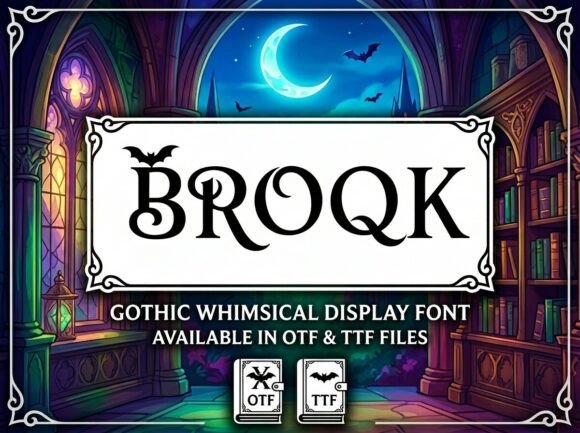
At its heart, Brook is an all-caps display font. This is a critical detail that defines its entire purpose and application. The absence of lowercase letters is not an oversight but a deliberate design choice. Every letterform in the Brook family is crafted as a distinct visual element, intended to be used in contexts where each character contributes to the overall graphic statement. This makes it fundamentally different from a versatile sans-serif or serif family designed for body copy. Its role is singular: to create bold, artistic headlines, logos, and initials that function almost as illustrative components within a layout.
Key Characteristics and Design Strengths
The value of a font like Brook lies in its ability to inject personality into a design. Its artistic elements—whether through unique swashes, unconventional letter structures, or a specific stylistic flair—give it a visual weight that can anchor a entire composition. When used for a logo, it doesn't just spell out a name; it helps define the brand's aesthetic. In packaging design, a headline set in Brook can set a product apart on a crowded shelf, communicating creativity and premium quality at a glance.
From a technical and usability standpoint, Brook is provided in the two most essential professional formats: OTF (OpenType Font) and TTF (TrueType Font). The OTF file is the standard for advanced design software like Adobe Illustrator or InDesign, offering the most refined typographic features. The TTF ensures broad compatibility across various operating systems and applications, which is crucial for projects where files might be used by clients or colleagues with different software setups. This dual-file delivery is a practical consideration that speaks to its professional orientation.
Practical Application and Real-World Performance
The true test of any asset is how it performs in actual use. For Brook, this means evaluating its effectiveness in its intended domains. Consider a startup crafting its brand identity. A logo set in Brook could immediately convey innovation and a break from convention. For a blogger or publisher, a chapter title or section header in Brook can visually segment content and add a layer of design sophistication that engages readers. In social media graphics or poster design, its high-impact nature ensures the message stands out in a fast-scrolling environment.
However, its strength is also its primary limitation. Because Brook is an all-caps display font, its use is inherently restricted. It is not suitable for setting paragraphs, lengthy descriptions, or any context where readability over many lines is required. Attempting to use it for body text would be impractical and visually fatiguing for the audience. Therefore, its integration into a project requires a complementary font—a clean, readable sans-serif or serif for supporting text. This is a common and professional practice in design, where a decorative font is balanced with a functional one.
Audience Fit and Strategic Recommendations
Brook finds its ideal audience among specific creative professionals. Marketers and entrepreneurs launching a campaign focused on bold, modern aesthetics will find it valuable. Graphic designers working on branding projects, event invitations, or editorial layouts can use it to create focal points. Small business owners in creative fields—such as boutique shops, artisanal food brands, or design studios—might leverage it to develop a distinctive visual voice. Even educators or speakers creating presentation title slides could use it to make a memorable first impression.
The decision to use Brook should be guided by the project's goals and audience. If the objective is to communicate elegance, tradition, or simplicity, another typeface would be more appropriate. But if the goal is to signal creativity, boldness, and a departure from the mundane, Brook is worth serious consideration. It is most effective when used sparingly and intentionally—think hero sections, single-word accents, or monogram-style initials where its detailed craftsmanship can be fully appreciated.
Considering Long-Term Value and Quality
When evaluating a creative asset like Brook, long-term value is an important consideration. A well-designed decorative font can become a recurring tool in a designer's toolkit, used across multiple projects over years. Its value is not in its ubiquity but in its ability to solve a specific design problem repeatedly: the need for a strong, stylistic typographic statement. The quality of the letterforms, their consistency in weight and style, and the reliability of the font files themselves all contribute to this long-term utility.
Before incorporating Brook into a critical project, a practical recommendation is to test it thoroughly. Install both the OTF and TTF files, experiment with kerning and tracking adjustments, and see how it interacts with your chosen color palette and imagery. Assess its readability at the intended display size. A font that looks stunning in a 200-point headline may lose its impact or become illegible at smaller sizes. Understanding these nuances is part of a professional workflow and ensures the typeface serves the design, rather than the other way around.
Ultimately, Brook is a specialized instrument. It is not the answer for every typographic challenge, but within its niche—a decorative, all-caps display font—it offers a strong visual personality and professional-grade files. For the creator or professional seeking to make a definitive artistic statement, it provides a viable and potentially powerful option to explore.